Skip to content


A Sustainability Milestone at Heritage Museums & Gardens
-Anne Scott Putney
We have some exciting news to share.
Several years ago, volunteers helped Heritage Museums & Gardens measure the carbon-storing power of the trees and shrubs throughout our landscape. That work gave us an important benchmark: our landscape is estimated to sequester, or absorb, approximately 136 U.S. tons of carbon dioxide each year. Since then, Heritage has been working steadily to reduce the carbon emissions associated with our operations.
Through improvements in building energy efficiency, the replacement of fossil-fuel-powered equipment with electric alternatives, and an increased reliance on clean renewable electricity, we have made significant progress. In 2013, Heritage emitted approximately 310 U.S. tons of carbon dioxide annually.
- By 2025, our tracked emissions from buildings, tools and vehicles had fallen to 113 U.S. tons – over a 60% reductio (A small percentage gas use remains difficult to quantify and is not included in this total.)
- The landscape continues to sequester an estimated 136 U.S. tons annually, approximately 23 tons more than Heritage’s currently tracked energy-related emissions.
- Work continues to reduce emissions through conservation, cleaner electricity, and the replacement of fossil-fuel-powered tools and vehicles with electric alternatives wherever practical.
That creates an important milestone for Heritage: our landscape is now estimated to absorb 23 U.S. tons more carbon dioxide each year than we emit through the energy use we currently track.
Growing Our Use of Solar Energy
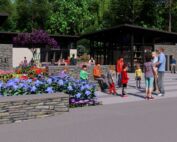
Another major step came in 2025 with the installation of approximately 140 solar panels on the Barbey Family Welcome Center, a net-zero group of buildings designed with sustainability at its core. Today, solar energy provides approximately 59 percent of the electricity used across our campus.
And our work is continuing. Heritage plans to expand its solar capacity with the goal of ultimately generating 100 percent of our electricity on site through solar energy.
The Landscape Is Part of the Solution
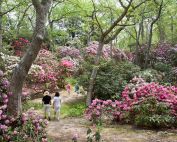
As a public garden, Heritage has always understood the importance of plants, trees, and healthy landscapes. But our carbon-sequestration study helped us better quantify something we see every day: landscapes are not simply beautiful places to enjoy. They can also play an important role in responding to climate change.
Our trees and shrubs continuously remove carbon dioxide from the atmosphere and store carbon in their trunks, branches, roots, and surrounding soils. By caring for an established landscape while simultaneously reducing the emissions associated with operating our campus, Heritage can approach sustainability from both sides of the equation.
We are reducing what we emit while protecting and strengthening a landscape that actively absorbs carbon.
A Community Effort
This milestone also belongs to the many volunteers who helped measure Heritage’s trees and shrubs and gather the information needed to estimate their carbon-storage capacity.
That work provided us with valuable data and gave Heritage a way to measure our operational progress against the environmental benefits provided by our living collection.
We are deeply grateful to everyone who contributed.
What Comes Next
There is still more work to do.
We will continue looking for opportunities to reduce energy use, transition away from fossil fuels, expand renewable energy, and make thoughtful choices about how we operate and care for our campus.
Reaching the point where our landscape absorbs more carbon dioxide annually than our currently tracked energy use produces is not an endpoint. It is an encouraging sign that sustained, practical changes can add up to meaningful progress.
For Heritage Museums & Gardens, sustainability means caring not only for the landscape visitors experience today, but also for the environment future generations will inherit.